
IMDb Movie Analysis with Python
In this data analysis project, we delve into the captivating world of cinema by exploring IMDb's Top 1000 Movies and TV shows. The primary objective is to find out the correlation between consumer viewing patterns and IMDb ratings.
Context
-
Source: The data is IMDb’s data till year 2020 and is sourced from Kaggle
-
Tool: Python programming language, utilizing Pandas, Matplotlib, and Seaborn libraries for data visualization
-
Analysis: The analysis is divided into 3 key parameters i.e. Genre, Director, and Timeline
#1 Genre Analysis
To get a better understanding of the data, I generated a bar plot to visualize the total counts of genres. Then, I calculated the mean IMDb ratings for each genre, selected the top 15 genres based on these ratings, and created a bar plot to display the results.
Library uses: seaborn and matplotlib


Next I wanted to understand revenue generation for each genre. The plot below visualizes the average gross revenue for each genre in the IMDB Top 1000 movies.

Here are 2 key insights:
-
While drama is the most common genre, it doesn't necessarily correlate with the highest IMDb ratings. Genres like war, western, film-noir, sci-fi, and mystery tend to receive higher IMDb ratings. This suggests that movies in these genres are more likely to be critically acclaimed and highly rated
-
Adventure, action, sci-fi, animation, and fantasy genres are known for generating significant gross revenue, often exceeding 100 million dollars. This indicates that because these genres tend to produce big-budget blockbuster movies, they frequently achieve substantial gross earnings
#2 Directorial Breakdown
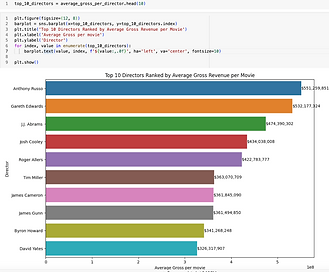
To understand the impact of directors, I broke it down into 3 subcategories and the results are surprisingly interesting:
a) Avg Gross Revenue per Movie
b) Total Gross Earnings
c) IMDb Rating


-
Director Anthony Russo stands out for his exceptional average gross earnings per movie (551.26 million dollars). His work on movies like "Avengers: Endgame" and "Avengers: Infinity War" likely contributed significantly to this high average, given the massive box office success of these films
-
What's interesting to notice is that the top 3 directors for total gross revenue are different and include Steven Spielberg, Christopher Nolan, and Anthony Russo. This indicates that directors like Spielberg and Nolan, while associated with successful individual movies, have a more diverse portfolio. While this may result in a slightly lower average gross per movie, it contributes to a more varied and enduring impact on the industry and revenue
-
Another interesting thing to notice is that while Anthony Russo tops the chart by revenue, he's unfortunately not ranked in the top 10 directors by IMDb rating. This probably could mean that the data is missing or skewed
#3 Timeline Analysis
To analyse how IMDb ratings have changed over the years, I first converted "released year" into a numeric format and then I removed any rows containing missing values using dropna. Then, I plotted the ratings with a trendline using sns.regplot

IMDb ratings have displayed a decreasing trend over time. This suggests that viewer expectations and preferences may have evolved, leading to more critical evaluations of content.
Some key insights:
-
While drama is the most common genre, it doesn't necessarily correlate with the highest IMDb ratings. Genres like war, western, film-noir, sci-fi, and mystery tend to receive higher IMDb ratings. This suggests that movies in these genres are more likely to be critically acclaimed and highly rated
-
Adventure, action, sci-fi, animation, and fantasy genres are known for generating significant gross revenue, often exceeding 100 million dollars. This indicates that because these genres tend to produce big-budget blockbuster movies, they frequently achieve substantial gross earnings
Applications
Understanding these trends is crucial for content creators, directors, and the industry to align with audience preferences, optimize content duration, and strategically position genres for commercial success. These insights can inform their creative decisions when developing new projects